In The Ruins
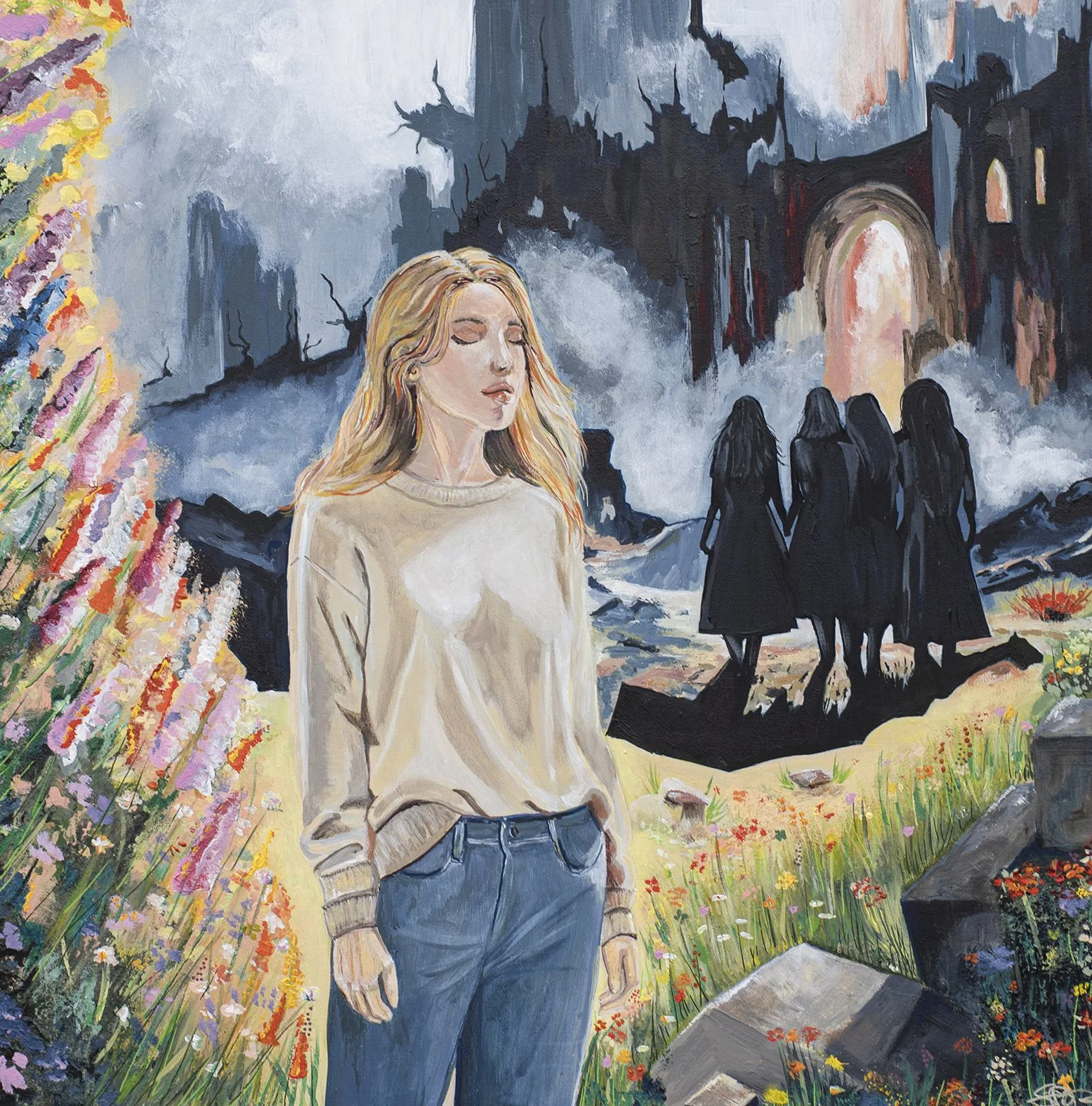
The world broke apart — not with a bang, but with a whisper. Like glass that slowly cracks, until one day you realize everything familiar has changed. Cities stood as hollow skeletons. Roads were devoured by weeds. The sound of human voices had become rare and distant.
We were thirty-three women, bound together by coincidence and necessity, moving from place to place in search of safety. We called ourselves nomads — not because we were seeking something specific, but because nowhere felt like home anymore.
Our refuges were found in the ruins of the old world: abandoned schools, forgotten libraries, empty office buildings. There was a strange, haunting beauty in them. I loved wandering through their echoing halls alone, turning rusty handles and opening doors that had not been touched for years. Behind them, I often found small miracles — rooms with soft sofas that still carried the scent of fabric and time, with faded cushions in the corners where you could almost sense the imprint of the last person who had sat there. Lounges where the light fell so beautifully that it was impossible not to dream. It was as if the world had left behind small pockets of beauty for us — hidden places where we could still breathe.
But outside, nothing was safe.
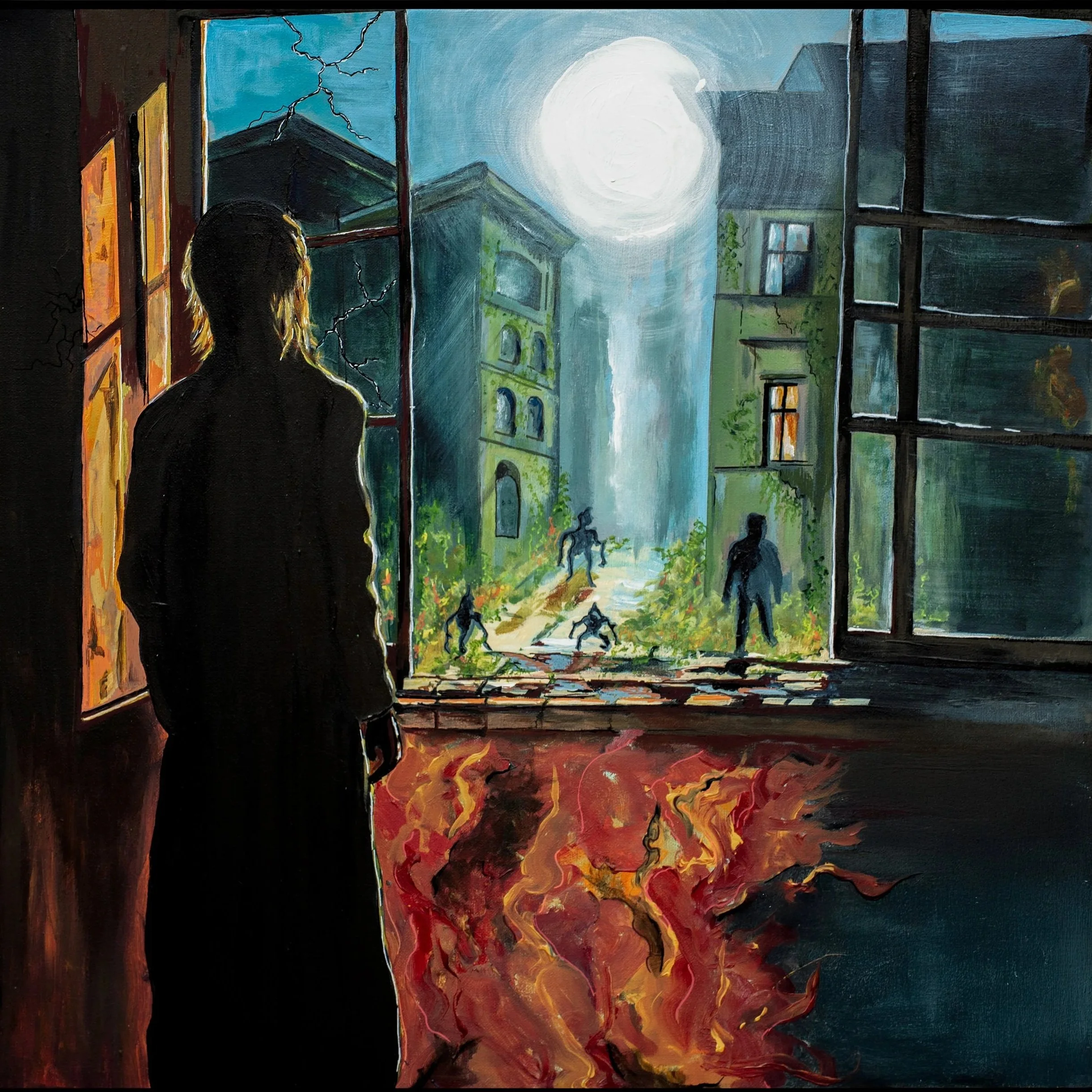
Goblins roamed the ruins — twisted creatures born of darkness. Always hungry. Always hunting. They were not wild things; they were controlled by people. Cruel people. Men in worn leather jackets and hollow faces who moved through the shadows and pulled invisible strings.
Their harsh cries echoed through the night, their shadows sliding over the rubble like predators on the scent of prey. We never knew how close they were — only that they never stopped searching.
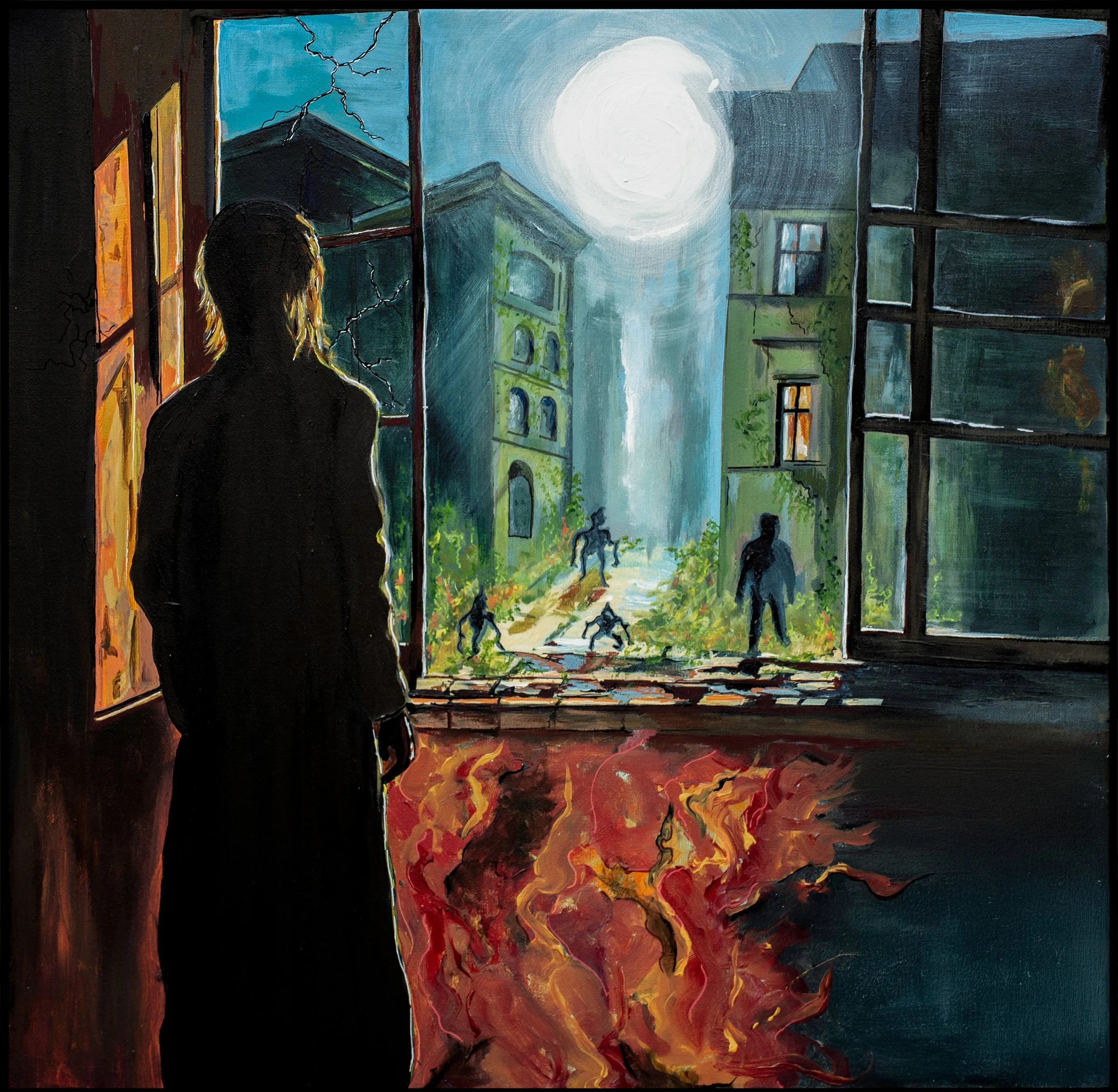
One late evening, I stood by a cracked window, staring out at the empty city. In the shadows of the street below, I saw one of the men. Just a silhouette in the moonlight, but his presence sent a chill through me. He did not look up, yet I was certain he knew I was there.
By Sanne Rosenmay
Prologue
There once was a world where people built cities and believed they had mastered time.
That world is gone. Now only the ruins remain — empty streets, shattered windows, and a silence that has swallowed every echo of what we once were.
We live among the remnants of what we called civilization, like shadows in a world that has forgotten us. Most days, it feels as if we have been erased. But on some days — the quiet ones, when the wind whispers through abandoned corridors — it feels as though something new is trying to be born.
Something fragile. Something true.
And that is where my story begins.
____
We were always hiding. And yet, something restless in me refused to stay inside. Maybe it was hope. Maybe defiance. Maybe a stubborn belief that I was more than just a survivor.
The air beyond the walls was heavy with danger. Still, one afternoon I took the chance and left our small oasis, never imagining I would come face to face with him. The boy.
I tried to climb a steep slope littered with old debris, as if someone had tried to build an earthen barricade from a junkyard. But something felt wrong. Someone had set traps. A pair of scissors stood planted in the ground — random, almost too innocent — yet I knew that if I touched them, the earth beneath me would give way. It was too deliberate. Too precise. As if every step I might take had already been predicted.
I stepped back and found myself standing on a quiet, green hillside. And there I saw him.
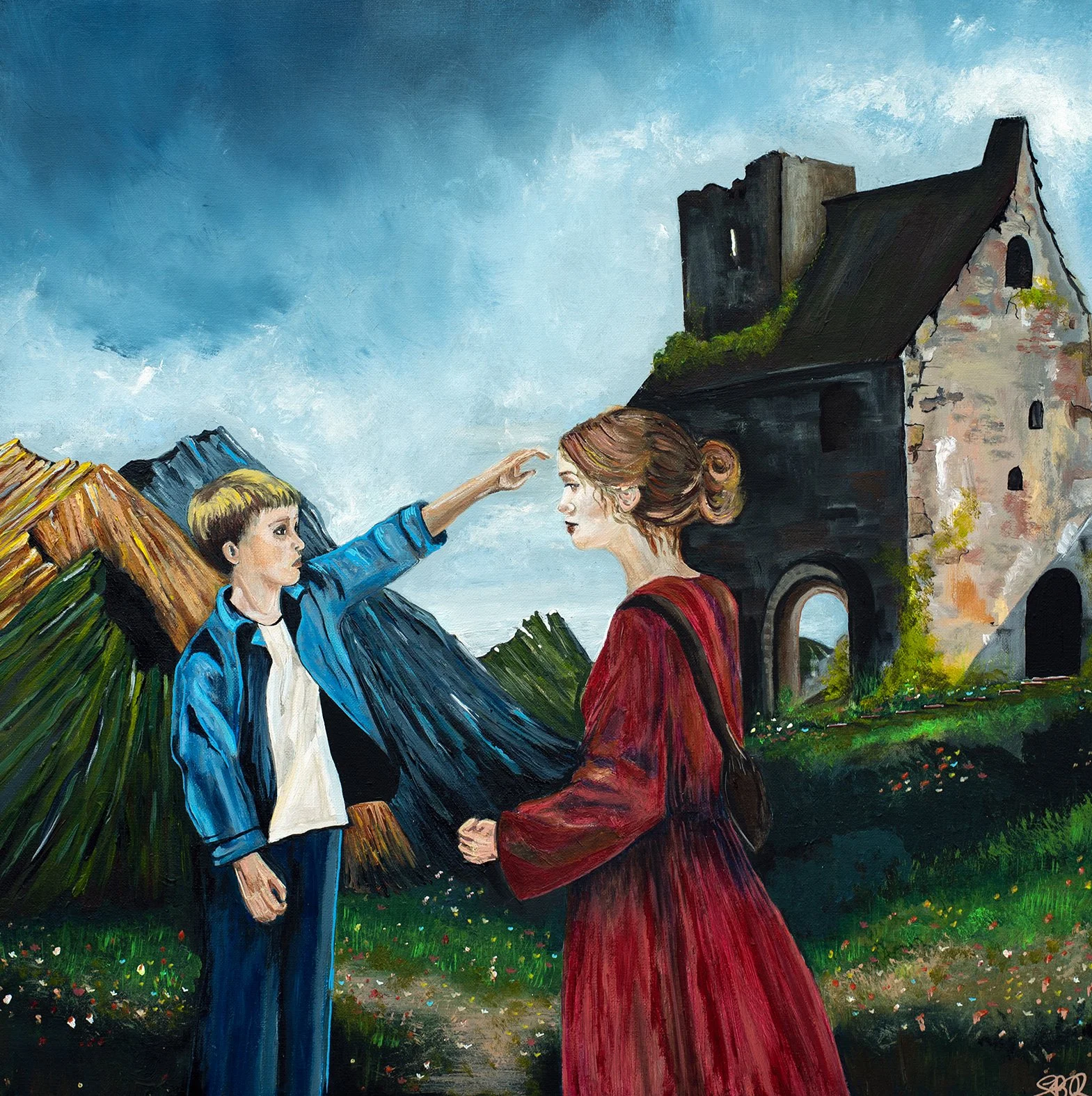
A boy — no more than twelve — yet his eyes were far older than his years. His skin was pale, almost translucent, and his eyes empty and blue like crystals. He belonged to another group, a faction said to possess powers we could not understand. He stepped closer, reached out his hand, and before I could pull away, a strange warmth flowed into me.
"Now you are whole," he said.
I stared at him, my heart heavy. "Have you made me evil?" I asked.
He did not answer. But I knew. Something was gone — something invisible yet precious. It felt as though he had drawn the goodness out of me: my instinctive compassion, my softness toward the world.
I grew angry. Not because he had hurt me, but because he had changed me without my consent. As if he had decided that I was too good, too gentle, too soft — and had therefore made me balanced. But who was he to decide what wholeness meant?
The anger stayed with me for days, smouldering beneath my skin. When I returned to our refuge, everything looked different. The light had changed colour. The air tasted strange. And deep inside, I sensed that something in me had been rewritten.
But life went on, as it always did. Days blurred into nights, and survival became a rhythm — quiet, cautious, relentless. Every now and then, when the clouds parted and the sun warmed the cracked streets, we allowed ourselves small gifts. On those rare afternoons, a walk beyond the walls felt like a quiet act of rebellion — a fleeting moment where we could pretend we were still human, and not just shadows hiding from the world.
It was on one of those afternoons that I walked with two of the women from our group. The sun hung low, the air was damp and clear, and the birds sang as if the world had never broken.
One of them walked quietly beside me — tall and fair, with a smile that needed no words. Her presence was gentle, like a calm hand at my back. The other was her opposite: short, with dark, lively curls dancing around her face and eyes full of conviction.
We walked in silence, and I let the warmth of the sun settle on my skin, my shoulders softening as the weight of the past days slowly released its hold on me.
"Do you believe?" she asked suddenly.
I hesitated before shaking my head.
She looked surprised and did not fall silent. Instead, she began to speak — carefully, passionately — telling me stories from her faith. Tales of beginnings and endings, of meaning and order, of a divine hand guiding all things. Her words were sincere, even beautiful, but they belonged to a world that was not mine.
When words failed, she began to sing. Her voice was soft, almost pleading, and though I did not understand the words, I understood the intent. She was trying to reach into the hollow I carried — to fill it with something that made sense to her, to shape me into something she could understand.
But I felt nothing. The more she spoke, the more she sang, the wider the distance between us grew. She searched for faith in me — a small ember she could breathe life into — but there was nothing there. The tall woman walked silently beside us, and in her silence there was a deeper understanding: perhaps I did not need to be filled at all.
And there, in the space between song and silence, I understood.
Wholeness was not a gift someone else could give me. It could neither be torn from me nor planted within me. It was not in the boy’s hands, not in her stories, not in the world’s expectations or definitions. Wholeness lived in what I chose to stay true to — in the parts of myself I refused to surrender.
Perhaps the world would never be as it was. Perhaps I would never again be who I had been.
But in the ruins of all that had been lost, I began to glimpse the faint outline of something new — not a version of myself shaped by others, but one I had chosen to become.